



Eccentric cycling involves resisting a motor-driven backward rotation of the pedals, causing the muscles to lengthen under tension. This form of exercise contrasts with traditional concentric cycling, where muscles shorten as they generate force. By engaging in eccentric muscle contractions, cyclists can achieve higher force outputs with lower energy expenditure, making it a valuable addition to training regimens.
Advantages of Eccentric Training
One of the primary benefits of eccentric training is its ability to produce greater muscle force with reduced energy consumption. This efficiency allows athletes to train at higher intensities without excessive fatigue. Additionally, eccentric contractions have been shown to promote muscle hypertrophy and strength gains more effectively than concentric actions, contributing to improved overall performance.
Enhanced Recovery & Injury Prevention

Incorporating eccentric exercises can aid in muscle recovery and reduce the risk of injuries. The unique muscle activation during eccentric contractions helps in repairing muscle fibers and strengthening connective tissues, leading to enhanced resilience against strains and overuse injuries. This aspect is particularly beneficial for professional cyclists who undergo rigorous training schedules.
Eccentric cycling has also been associated with lower oxygen consumption and heart rate compared to concentric cycling at similar workloads. This metabolic efficiency enables cyclists to maintain high-performance levels while conserving energy, which is crucial during prolonged events or stages.
Cyclus2 Eccentric Ergometer: A Game Changer

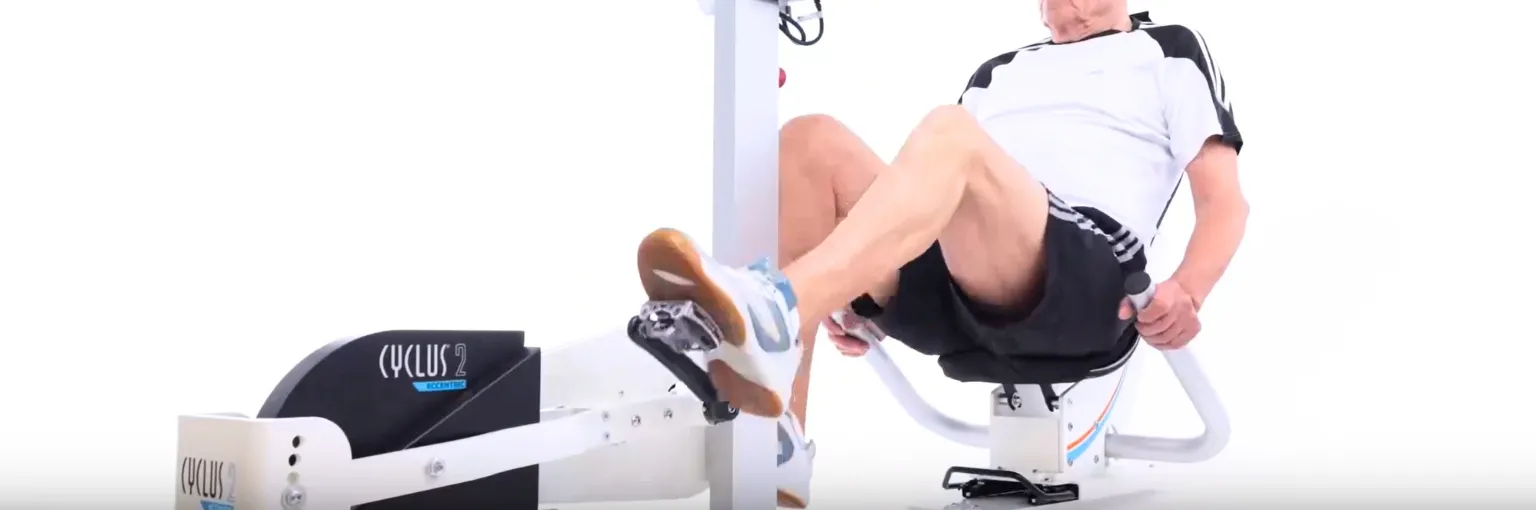
The Cyclus2 Standard ECCENTRIC ergometer is designed to facilitate eccentric cycling training by allowing athletes to resist a motor-induced backward pedal rotation. With a drive power of up to 2000 W, it caters to high-performance training demands. The ergometer’s compatibility with various sensors and data recording capabilities enables precise monitoring and analysis of training sessions, ensuring targeted and effective workouts.
Conclusion
Integrating eccentric cycling training into a professional cyclist’s regimen offers numerous benefits, including increased muscle strength, enhanced recovery, and improved metabolic efficiency. The Cyclus2 Eccentric Ergometer provides a specialised platform to harness these advantages, supporting athletes in achieving peak performance.
For more information on Cyclus2 cycling ergometers, visit our page to find out more: https://bmec.asia/cyclus2
Source
Resource
- Eccentric Training. (n.d.). In Wikipedia. Retrieved from https://en.wikipedia.org/wiki/Eccentric_training.
- Flywheel Training. (n.d.). In Wikipedia. Retrieved from https://en.wikipedia.org/wiki/Flywheel_training.
- Chronic Adaptations to Eccentric Cycling Training: A Systematic Review and Meta-Analysis. (2023). International Journal of Environmental Research and Public Health, 20(4), 2861. https://doi.org/10.3390/ijerph20042861.
- (n.d.). Cyclus2. Retrieved from https://www.cyclus2.com/en/eccentric.
- No more Nutella: how cyclists keep the weight off during the off-season. (2024, November 15). The Times. Retrieved from https://www.thetimes.co.uk/article/cycling-off-season-fitness-weight-dsv2sbf0s.
- I trained alongside a Tour de France stage winner to test cycling’s next big thing – I was well and truly humbled. (2024, December 10). The Sun. Retrieved from https://www.thesun.co.uk/sport/31800263/tour-de-france-heat-training-victor-campenaerts-cycling/.