
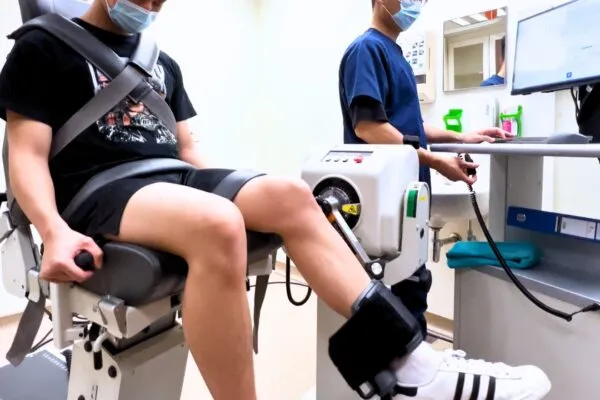

Maintaining balance is essential for everyday activities, from standing and walking to navigating crowded or uneven environments. However, balance difficulties caused by ageing, neurological conditions or vestibular disorders can affect mobility, confidence and independence. While conventional rehabilitation focuses on improving stability through controlled exercises, immersive Virtual Reality (VR) introduces new opportunities to simulate real-world challenges, helping patients practise balance control in more interactive and adaptable environments.
Why Is Sensory Integration Important for Balance?
Maintaining balance requires the brain to continuously process information from three main sensory systems: vision, the vestibular system and proprioception. These systems work together to help individuals understand their body’s position and respond to changes in their surroundings. When one or more systems are impaired, individuals may experience dizziness, instability or difficulty maintaining balance, particularly in visually complex environments.
Understanding how these systems contribute to postural stability is an important part of balance assessment. The Sensory Organization Test (SOT), for example, evaluates how individuals use sensory information under different visual and surface conditions. By identifying difficulties in sensory integration, clinicians can better understand the factors contributing to balance impairments and develop more targeted rehabilitation strategies.
How Can Immersive VR Enhance Balance Rehabilitation?
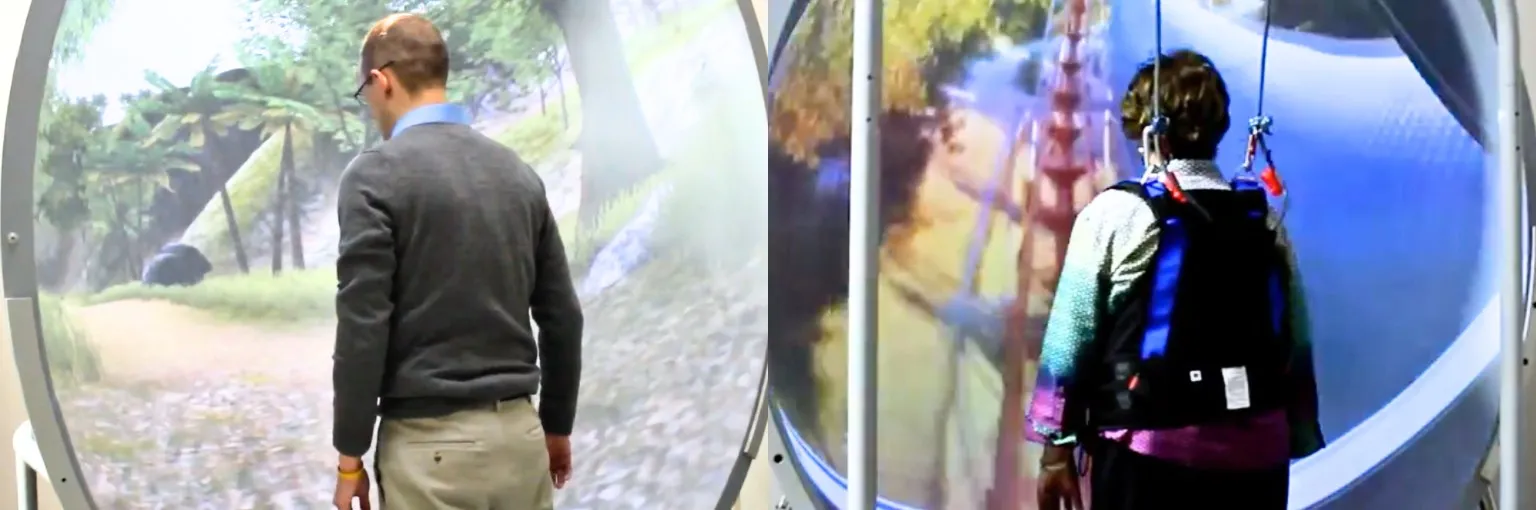
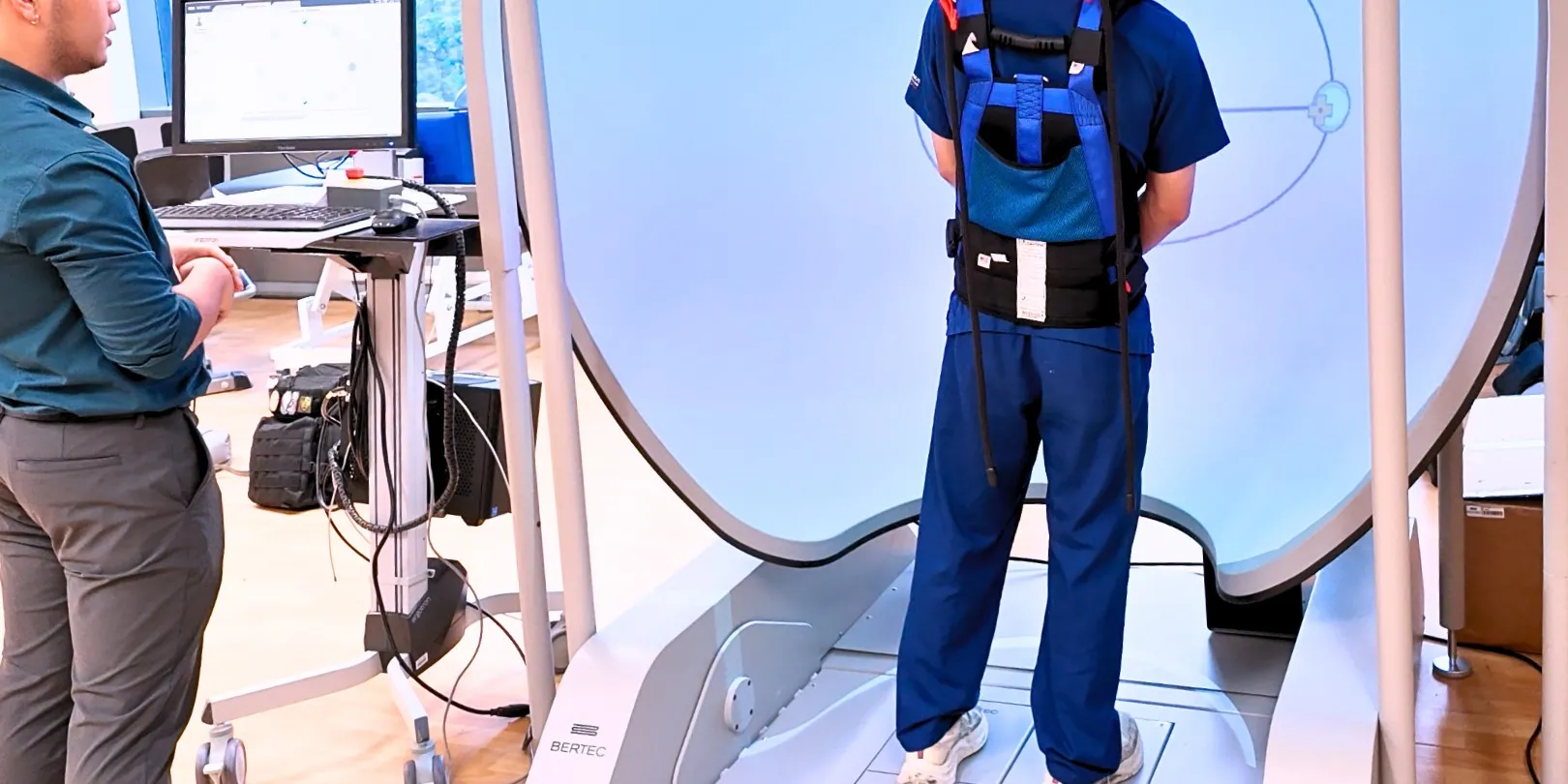
Traditional balance exercises often take place in predictable clinical environments, which may not fully reflect the challenges encountered in everyday life. Real-world situations such as navigating busy spaces, responding to moving surroundings or maintaining stability on uneven surfaces require the body to continuously adapt. Immersive VR helps bridge this gap by recreating complex visual environments within a controlled setting.
Through interactive visual scenarios, clinicians can introduce sensory challenges and gradually adjust their difficulty according to individual abilities. These environments encourage patients to practise maintaining postural control while responding to changing visual information. VR-based training can also make repetitive exercises more engaging, supporting patient participation while allowing therapists to introduce greater variety into rehabilitation sessions.
Technology Supporting More Personalised Balance Training

Combining immersive VR with objective balance measurements allows clinicians to assess postural stability while introducing controlled sensory challenges. Force plate technology, for example, measures changes in the centre of pressure and postural sway, providing quantifiable information about how individuals maintain balance. These measurements can help clinicians identify movement patterns, monitor progress and adjust rehabilitation activities according to individual needs.
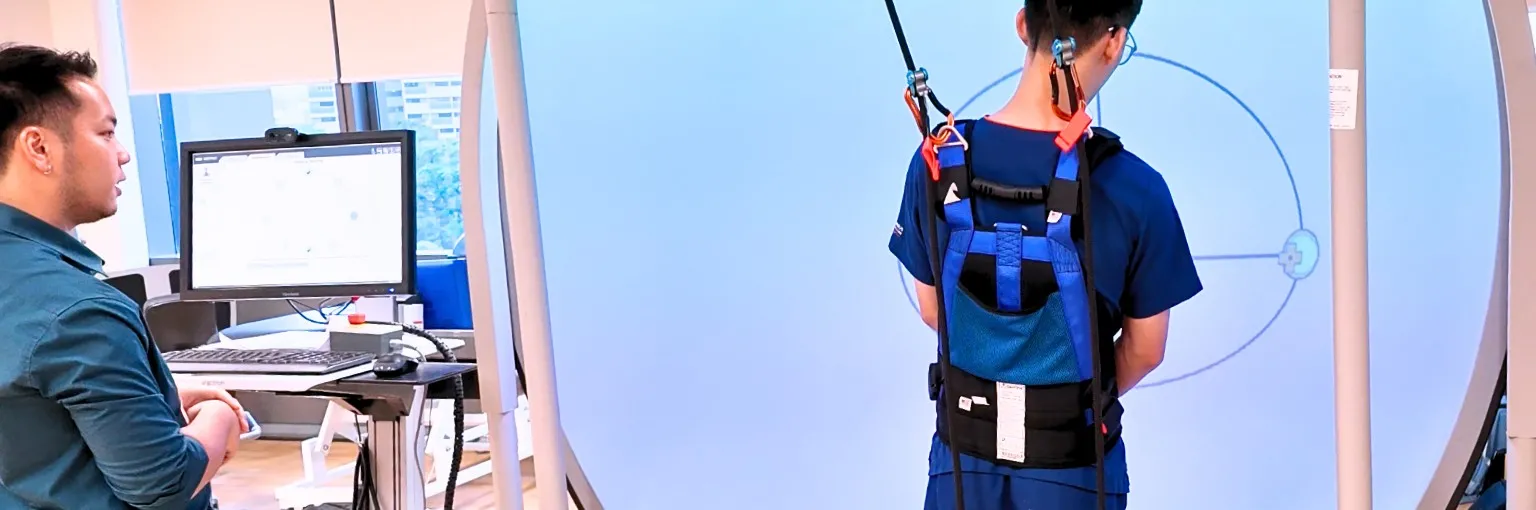
The Bertec CDP (Computerized Dynamic Posturography) system combines dual-balance force plate technology with immersive virtual environments for balance assessment and rehabilitation. It supports established assessment protocols, including the Sensory Organization Test, while providing adjustable visual scenarios for targeted balance training. Clinicians can modify the difficulty of visual stimuli in real time, allowing exercises to be adapted to different functional abilities and rehabilitation goals. The system also supports objective progress tracking through its assessment and reporting capabilities. Learn more about the Bertec CDP from our page: https://bmec.asia/bertec/
Source
- Bertec Corporation. (2025). Transforming Gait Labs: The Future of Biomechanics. Published 18 November 2025. https://www.bertec.com/blog/transforming-gait-labs-bertecs-vr-enabled-biomechanics-platform-for-advanced-human-movement-research
- Bertec Corporation. (2025). Bringing Real-World Complexity into the Lab. Published 19 November 2025. https://www.bertec.com/blog/bringing-real-world-complexity-into-the-lab
- Bertec Corporation. (2025). Balance Plates: A Critical Part of Patient Assessments in Physical Therapy. Published 31 July 2025. https://www.bertec.com/blog/balance-plates-critical-part-of-patient-assessments
- Bertec Corporation. (2025). The Sensory Organization Test (SOT): How We Measure Balance and Why It Matters. Published 6 May 2025. https://www.bertec.com/blog/the-sensory-organization-test-sot-how-we-measure-balance-and-why-it-matters
- Bertec Corporation. (n.d.). CDP/IVR: Computerized Dynamic Posturography. Bertec. Accessed 12 November 2026. https://www.bertec.com/products/cdp-ivr