
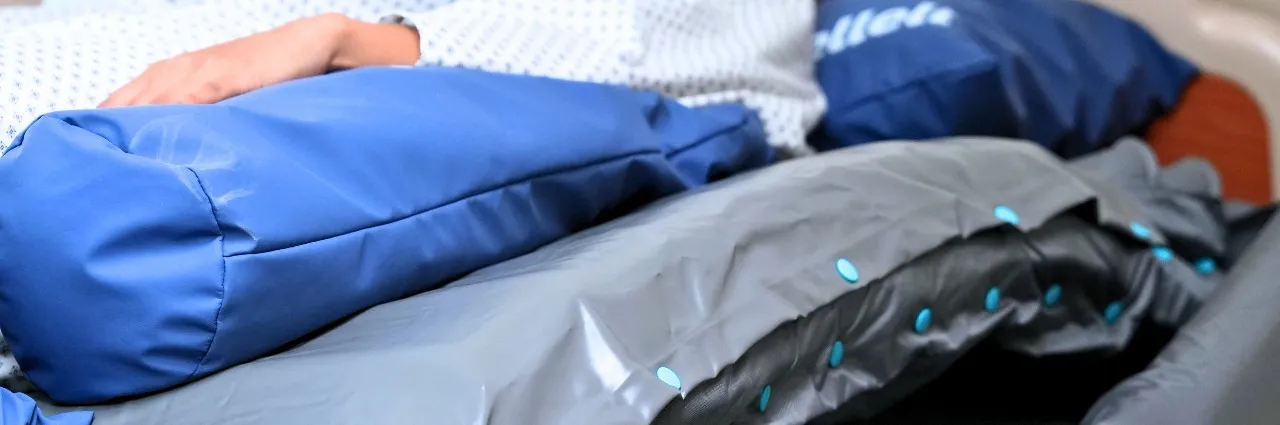
Pressure is continuously applied somewhere on the body when individuals are required to spend extended periods in bed or have limited mobility. Bony prominences such as the sacrum, hips and heels can be particularly vulnerable when pressure is sustained for long periods. Repositioning helps offload these areas and redistribute pressure across different parts of the body.
What Should Be Considered When Repositioning?
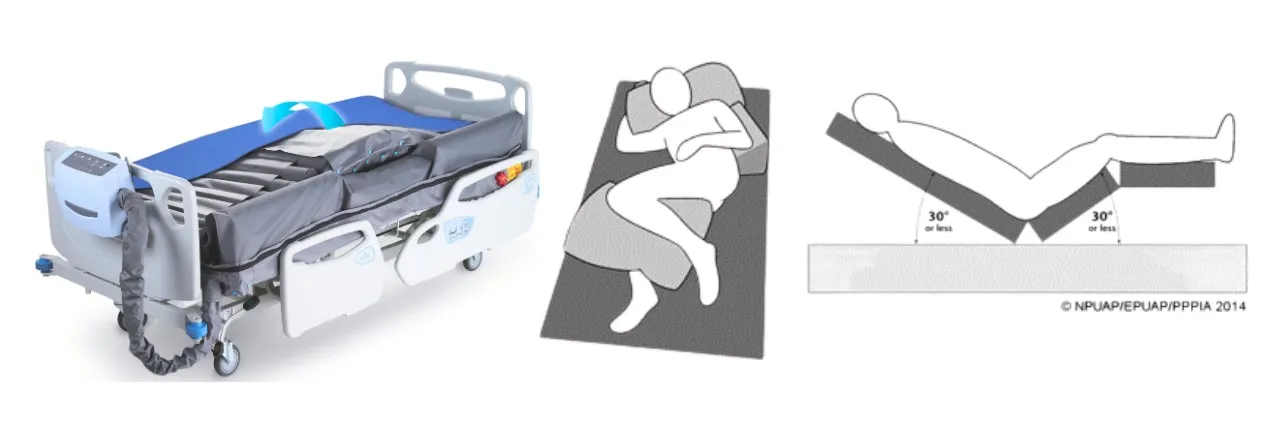
Effective repositioning involves more than simply changing a person’s position. Pressure points should be assessed to ensure that vulnerable areas are adequately offloaded. Particular attention should also be given to the heels, which may remain exposed to pressure even when regular repositioning is performed. Medical devices, tubes and drainage systems should also be considered so that the individual is not positioned directly on them.
For individuals with pressure injuries, positioning techniques can help reduce additional pressure and shear. A 30° side-lying position may be preferred over a 90° side-lying position, while keeping the head of the bed as flat as clinically appropriate can help minimise pressure and shear. When repositioning, the individual should be lifted rather than dragged to reduce shear forces, with pillows, wedges or other supportive devices used where appropriate to maintain positioning and offload vulnerable areas.
Why Regular Repositioning Can Be Challenging?
Although regular repositioning is important, carrying it out consistently can place considerable demands on caregivers. Turning an individual with limited mobility may require physical lifting and handling, particularly when the person is unable to assist with the movement. Repeated patient handling can add to caregivers’ workload and expose them to physical strain.
Consistency can also be challenging when repositioning needs to continue throughout the day and night. This highlights the importance of solutions that support both pressure redistribution and practical caregiving workflows. Regardless of the support surface being used, regular skin assessment and monitoring remain important so that repositioning frequency can be adjusted according to the individual’s response.
How Can Automated Turning Support Pressure Redistribution?
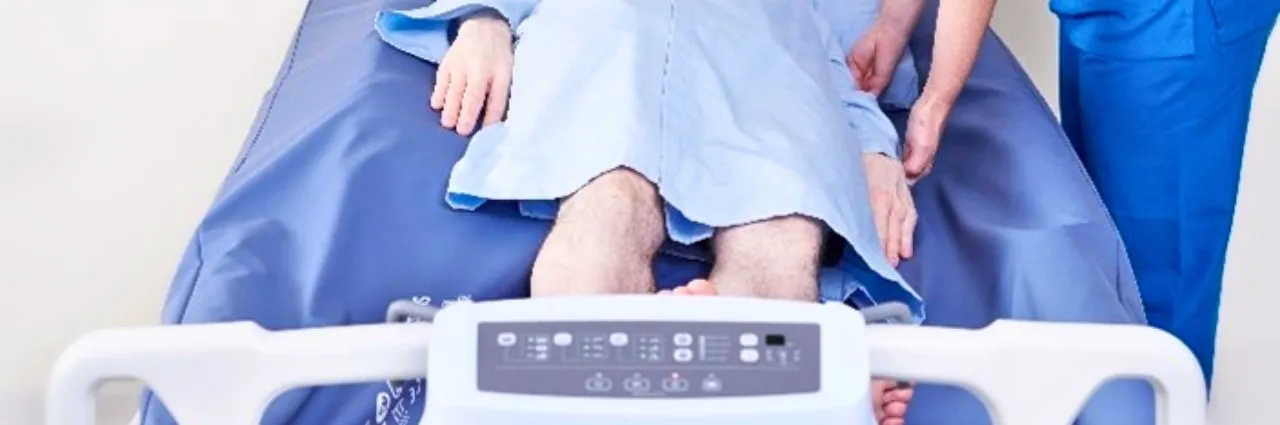
Technology can help support repositioning by providing more consistent turning while reducing the amount of manual handling required from caregivers. Automated lateral rotation can complement pressure redistribution by changing the areas exposed to sustained pressure according to a programmed turning schedule.
The Wellell Optima Turn is a lateral rotation mattress designed to support pressure injury prevention and reduce caregiver workload associated with repositioning. The system combines alternating pressure relief with automated lateral turning of up to 30°, helping redistribute pressure while maintaining patient comfort and stability. Its turning schedule can be customised according to individual care needs, while side bolsters provide additional support during rotation. Individual air cells at the heel area can also be deflated to provide personalised heel offloading. Take a look at more information on Optima Turn now: https://bmec.asia/my/wellell
More Information
- Wellell Inc. “Turning and Positioning: Vital Steps for Pressure Redistribution.” Wellell, 2 July 2024. Wellell – Turning and Positioning
- Wellell Inc. “Optima Turn User Story.” Wellell. 2023. Wellell – Optima Turn User Story
- Wellell Inc. “Optima Turn: Lateral Rotation Mattress.” Wellell. Accessed 10 September 2026. Wellell – Optima Turn
- European Pressure Ulcer Advisory Panel, National Pressure Injury Advisory Panel, and Pan Pacific Pressure Injury Alliance. Prevention and Treatment of Pressure Ulcers/Injuries: Clinical Practice Guideline. Edited by Emily Haesler. EPUAP/NPIAP/PPPIA, 2019. This is the clinical guideline referenced by Wellell for its recommendations on turning, positioning and pressure injury prevention.
Wellell, BMEC Pte Ltd