

Force plates have become one of the most valuable tools in modern sports science, providing detailed insights into how athletes generate and absorb force during movement. By measuring ground reaction forces, balance, and center of pressure data, force plates allow coaches, sports scientists, and clinicians to assess performance with a level of precision that cannot be achieved through visual observation alone. These measurements are essential for understanding movement efficiency, power generation, and biomechanical performance.
As sports performance analysis becomes increasingly data-driven, force plates are being used across a wider range of applications, including jump analysis, gait assessment, landing mechanics, and injury risk evaluation. Their ability to capture highly accurate force and moment data in real time enables practitioners to make more informed training and rehabilitation decisions.
The Growing Role of Force Plates in Athlete Performance & Injury Prevention

One of the key strengths of force plate technology is its ability to help optimise athletic performance while reducing injury risk. By analysing movement asymmetries, loading patterns, and force production characteristics, practitioners can identify inefficiencies or imbalances that may affect performance or increase the likelihood of injury. This allows training programs to be tailored more precisely to the athlete’s needs.
Force plates are also increasingly integrated into return-to-play protocols and athlete monitoring systems. Metrics such as jump height, reactive strength, and force-time characteristics provide objective indicators of fatigue, readiness, and recovery. This enables coaches and therapists to track progress over time and make evidence-based decisions regarding training intensity and rehabilitation progression.
The Future of Force Plate Technology: Portable, Integrated & Smarter
The future of force plate technology is moving toward greater portability, integration, and accessibility. Traditionally limited to biomechanics laboratories, newer portable force plate systems now allow accurate data collection in more natural environments such as sports fields, gyms, and rehabilitation clinics. This shift enables practitioners to assess athletes in real-world training conditions while maintaining high measurement precision.
Another major advancement is the integration of force plates with motion capture systems and biomechanical software. Combining kinetic data from force plates with kinematic data from motion capture provides a more complete understanding of movement mechanics. This integrated approach supports deeper analysis of athletic movements, from sprinting and cutting manoeuvres to jumping and landing strategies. As software and sensor technologies continue to evolve, force plate systems are expected to become even more intelligent, efficient, and adaptable to various sports science applications.
Advancing Sports Science with Bertec Force Plates
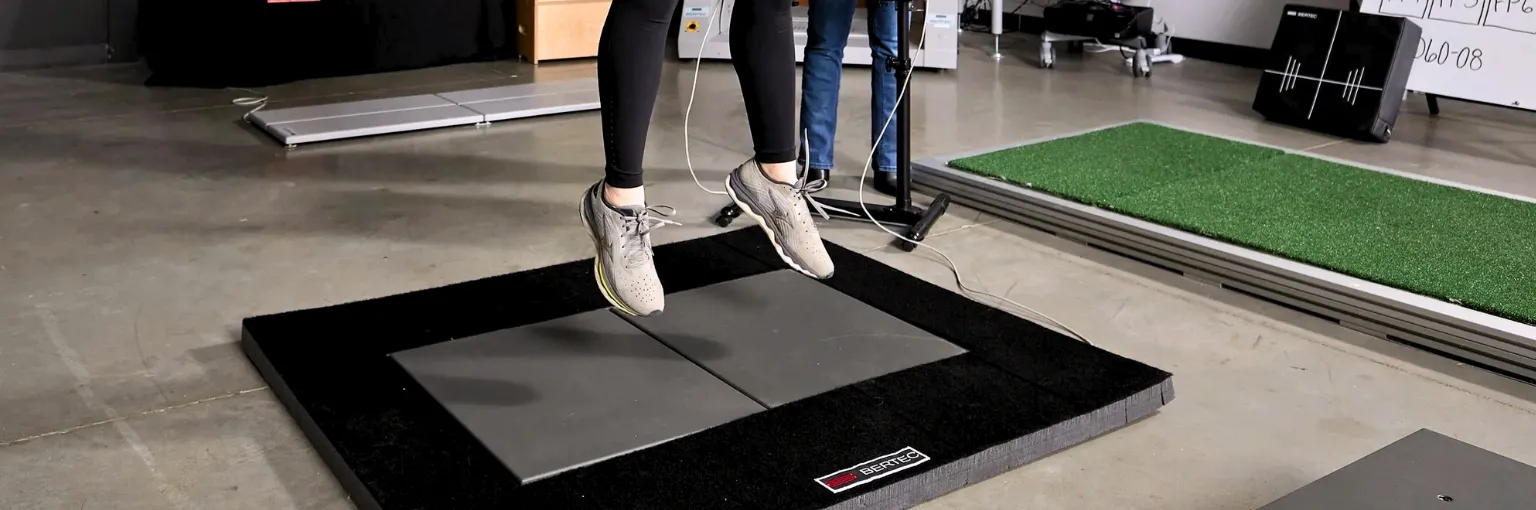
Bertec Force Plates are designed to deliver highly accurate force and center of pressure measurements for sports performance, biomechanics, gait, and balance analysis. Built with patented strain gauge technology and advanced electronics, the systems provide precise data with negligible cross talk, drift, and signal interference. Their versatility allows them to be used in a wide range of sports science and rehabilitation applications.
To find out more about Bertec Force Plates, visit our page now: https://bmec.asia/my/bertec
More Information
- Introduction to Force Plates: Revolutionizing Movement Analysis. https://www.bertec.com/blog/introduction-to-force-plates-revolutionizing-movement-analysisnbsp
- The Future of Force Plate Technology. https://www.bertec.com/blog/the-future-of-force-plate-technology
- Force Plates Application in Sports Science. https://www.bertec.com/blog/force-plates-application-in-sports-science
- Force Plates Product Page. https://www.bertec.com/products/force-plates
Bertec, BMEC Pte Ltd