

Speed is one of the most important qualities in many sports, but accurately measuring it requires more than simply watching an athlete sprint or recording a time with a stopwatch.
Timing gates provide an automated way to capture the exact moment an athlete passes specific points on a track, generating precise split times that can reveal how speed develops throughout a sprint. Unlike manual timing, electronic timing removes the reaction-time variability of the person operating the stopwatch, giving coaches and sports scientists a more objective basis for evaluating performance.
More importantly, timing gates allow practitioners to look beyond a single final time. By positioning gates at different distances, coaches can examine acceleration, transition, maximum velocity, and deceleration across different phases of movement. This turns a sprint test into a more detailed movement profile that can reveal where an athlete’s strengths and limitations lie.
Why Data Quality Matters in Sports Performance Testing
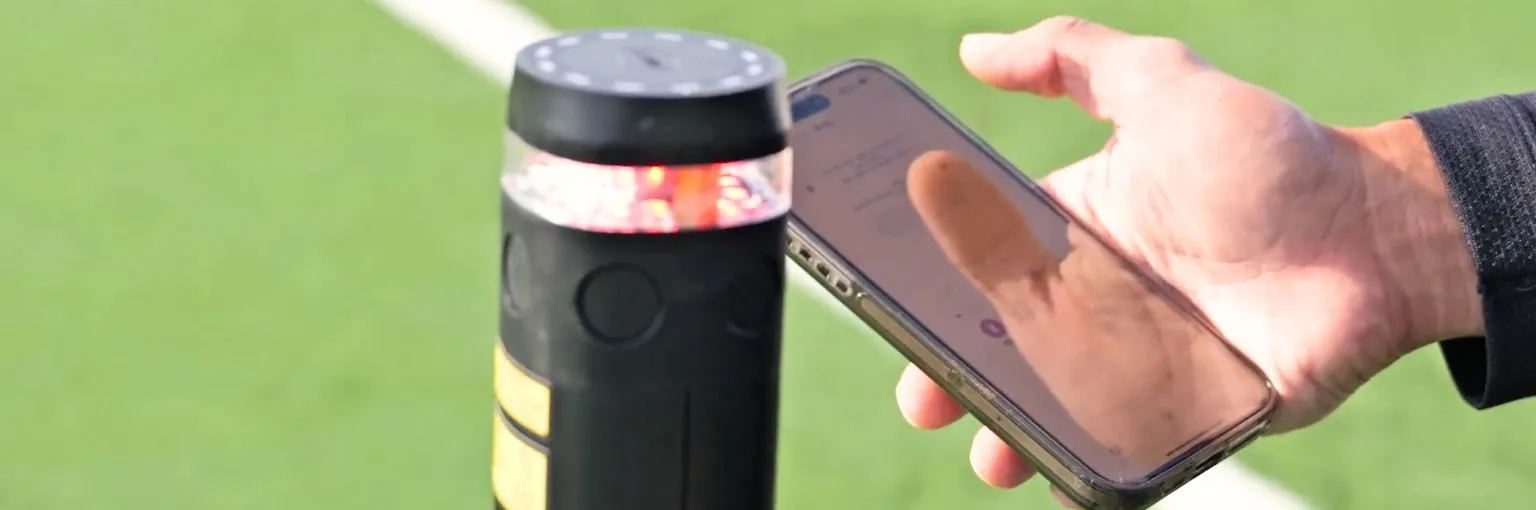
Accurate equipment alone does not guarantee meaningful performance data. Testing protocols, starting position, gate alignment, environmental conditions, and surface can all influence sprint results. Consistency is therefore essential when comparing an athlete’s performance across sessions. Using the same starting procedure and environmental conditions helps ensure that changes in performance reflect genuine adaptation rather than differences in the testing process.
The design of the timing gate itself can also influence data quality. Single-beam systems may be triggered by an athlete’s arm or loose clothing, potentially recording the athlete before their torso has actually crossed the measurement point. Dual-beam systems address this issue by requiring both beams to be broken simultaneously, helping the system identify the athlete’s body rather than an individual limb. This can produce more consistent measurements, particularly during acceleration and multidirectional movements.
Connecting Sprint Speed with Force & Movement Performance
Timing data becomes even more valuable when it is interpreted alongside other aspects of athletic performance. Sprinting is fundamentally different from movements such as jumping because sprint acceleration depends heavily on the athlete’s ability to direct force horizontally. An athlete may demonstrate strong vertical force production but still struggle to accelerate effectively if they are unable to apply force efficiently in the direction of travel.
For this reason, sprint split times can complement jump testing and other performance assessments to provide a broader understanding of an athlete’s physical profile. Combining timing-gate data with jump data, for example, can help practitioners examine the relationship between speed and strength qualities and identify areas that may require greater emphasis in training. Rather than treating speed as a single outcome, this approach allows coaches to use objective measurements to better understand how an athlete produces and applies force during performance.
Sports Performance Testing with Swift Performance G4 Timing Gates
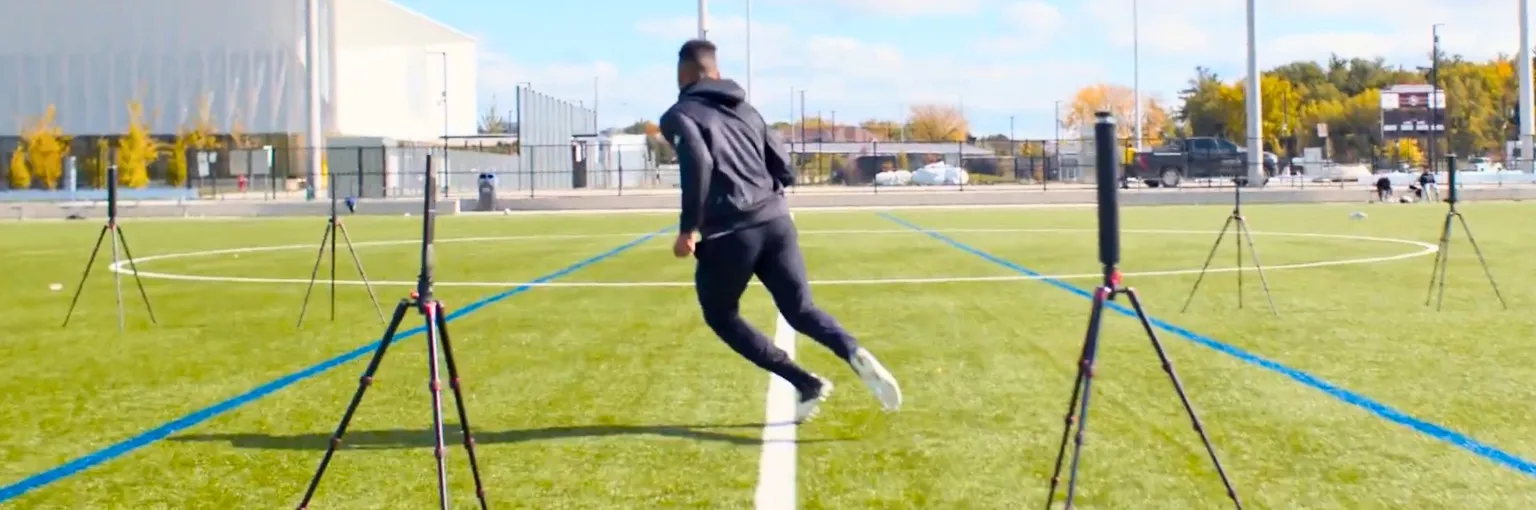
The Swift Performance G4 Timing Gates are designed to provide reliable, high-precision sprint and agility testing in demanding sports environments. The system uses SwiftAir radio communication with a range of up to 400 m, while dual-beam gates require both beams to be broken simultaneously to reduce false triggers caused by arm movement or loose clothing. The system can be configured with multiple gates for different testing protocols and supports applications ranging from short acceleration tests to longer sprint and agility assessments. Learn more about G4 by visiting our page now: https://bmec.asia/my/swift
More Information
- Swift Performance. The Complete Guide to Sprint Timing Gates: How They Work, What to Measure, and How to Choose. Swift Performance, 1 June 2026. https://www.swiftperformance.com/blog/sprint-timing-gates-guide
- Swift Performance. Why Most Sprint Testing Is Producing Garbage Data (And What to Do About It). https://www.swiftperformance.com/blog/sprint-testing-data-quality
- Swift Performance. Horizontal vs Vertical Force: Why the Direction of Force Production Changes Everything. https://www.swiftperformance.com/blog/horizontal-vs-vertical-force
- Swift Performance. G4 Laser Timing Gates, Dual Beam Sprint Timing System. https://www.swiftperformance.com/products/g4
Swift Performance, BMEC Pte Ltd