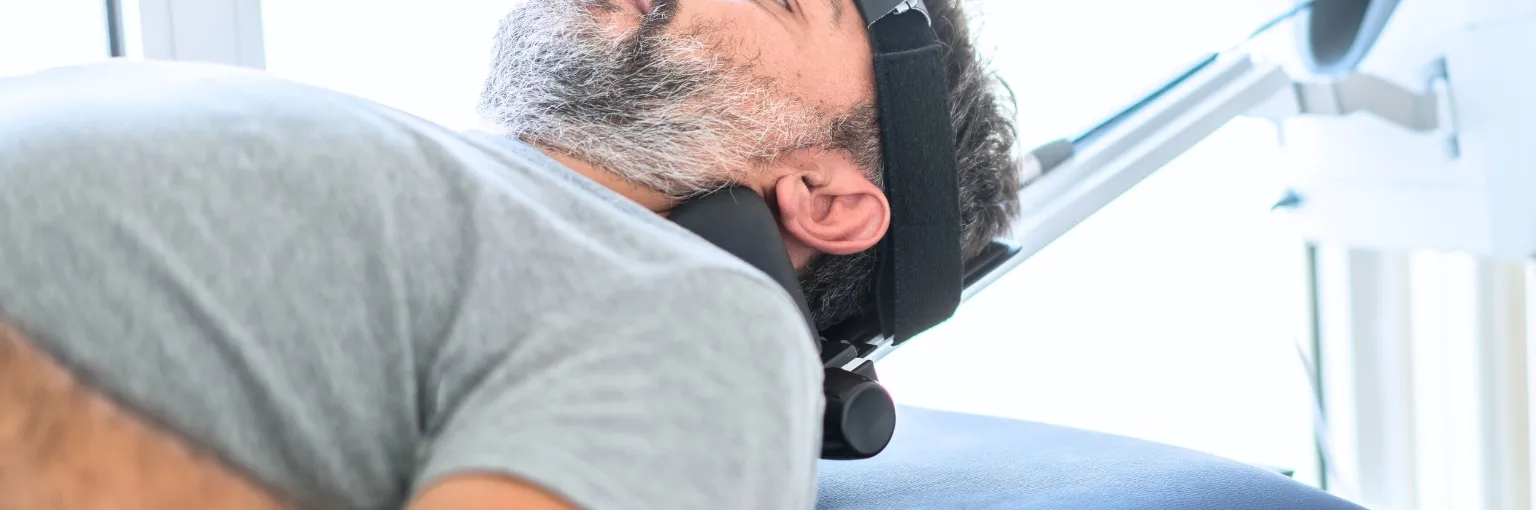
Traction therapy is a well-established treatment approach used to relieve spinal pain and dysfunction.
Whether addressing a herniated disc, degenerative discopathy, or a pinched nerve, traction works by gently applying a controlled pulling force to the spine. This process reduces pressure between the vertebrae, creating spinal decompression. As pressure decreases, mechanical stress on compressed nerves is relieved, while circulation and oxygen supply to surrounding tissues improve. These combined effects can result in both immediate pain reduction and longer-term structural improvements.
By influencing intervertebral spacing and reducing nerve irritation, traction therapy supports natural healing processes. It is commonly applied to both the lumbar and cervical regions, depending on the pathology and clinical presentation. With appropriate force control and positioning, traction becomes a precise and targeted intervention within physiotherapy practice.
Clinical Applications & Therapeutic Benefits

Traction therapy is indicated for a range of musculoskeletal and neurological conditions. It is frequently used in cases involving disc protrusion, nerve root compression, and increased muscle tone. The therapeutic goals include pain reduction, decompression of pinched nerves, decrease of disc protrusion, reduction of muscle tension, and improvement of range of motion and flexibility.
Different forms of traction can be applied depending on the patient’s needs. Static traction maintains a constant force over a defined period, while intermittent traction alternates between hold and relaxation phases. Pro- and regressive traction gradually increases or decreases force, and cyclic patterns combine variations to optimize comfort and therapeutic effectiveness. In acute cases, static traction alone may be uncomfortable, making combinations of static and intermittent traction particularly valuable.
Precision, Control & Real-Time Feedback in Modern Traction
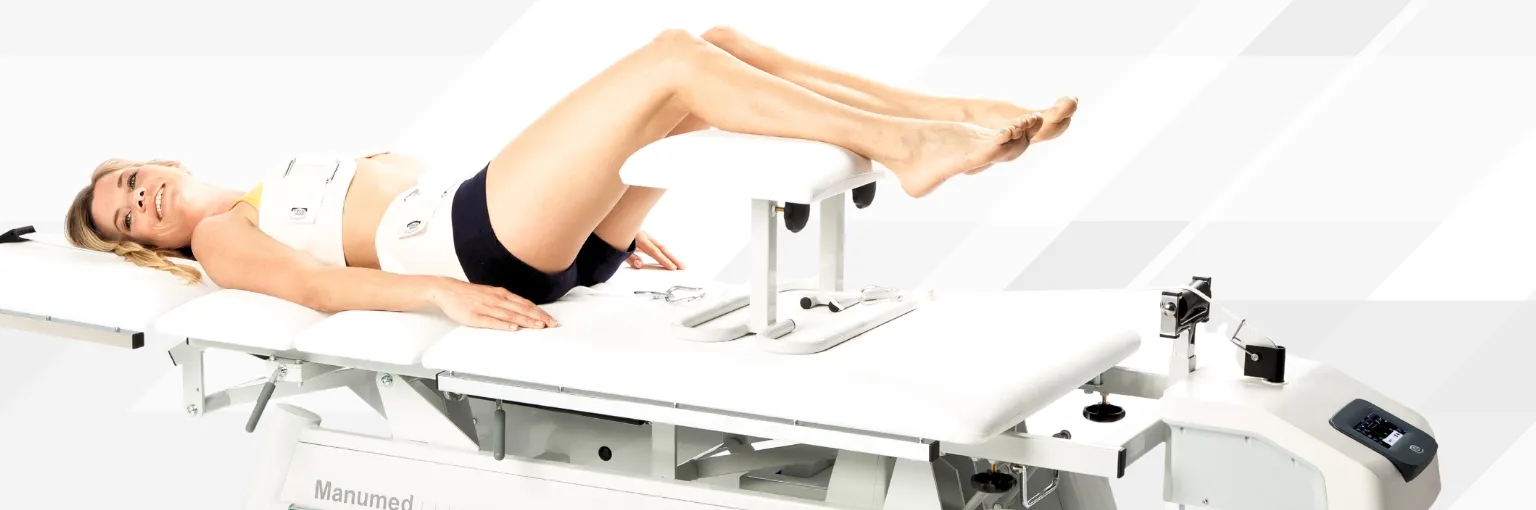
Modern traction devices emphasise precision and safety. Accurate control of traction force is essential, not only in achieving therapeutic results but also in ensuring patient comfort and safety. Advanced systems allow forces to be adjusted in small, precise increments and measure the applied force continuously during treatment. Any deviation from the programmed setting can be immediately corrected, ensuring consistent delivery throughout the session.
Equally important is control over the speed at which traction force increases or decreases. Rather than estimating speed as a percentage of motor capacity, modern systems allow clinicians to set traction speed precisely in Newtons per second. Real-time graphical displays provide immediate visual feedback, enabling therapists to monitor the exact course of treatment rather than relying on averaged data. This level of transparency supports informed clinical decisions and enhances treatment confidence.
Advancing Traction Therapy with the Enraf-Nonius Eltrac 471
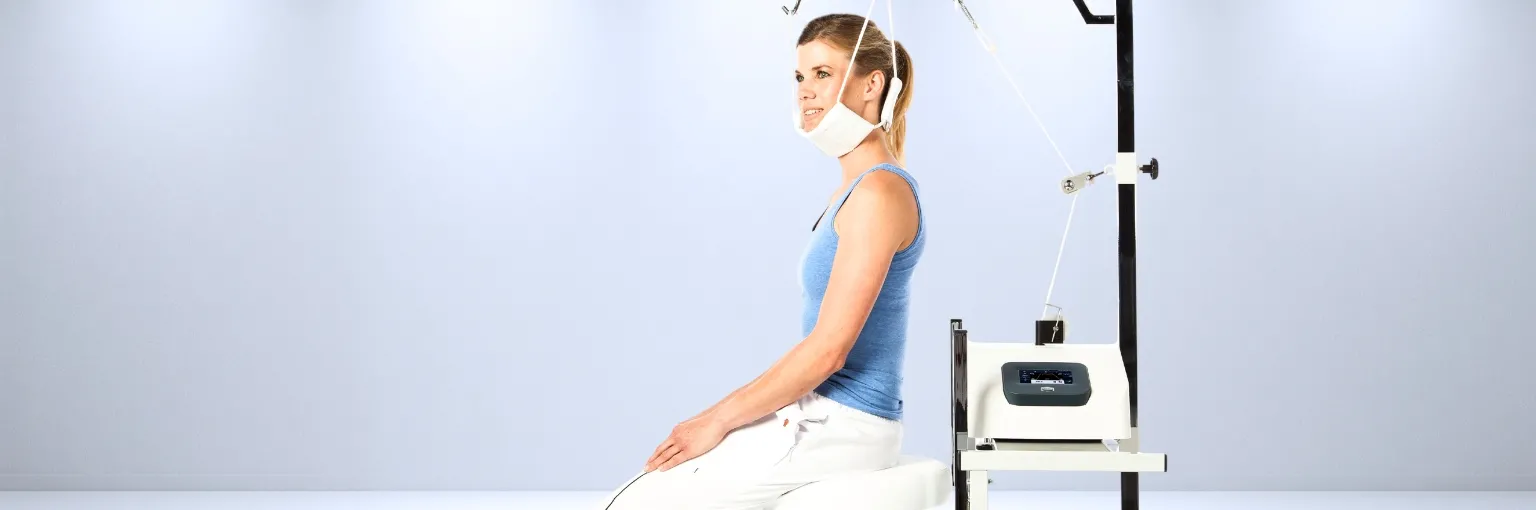
The Enraf-Nonius Eltrac 471 represents the newest generation of traction therapy equipment, designed for lumbar and cervical applications using static, intermittent, pro- and regressive, and cyclic forms of traction. It offers highly accurate force adjustment, real-time feedback through a full-colour touchscreen interface, and programmable treatment protocols, including sequential therapy combinations.
With traction forces ranging from 15 to 900 Newtons and adjustable speed control, the Eltrac 471 delivers precision and flexibility tailored to individual patient needs. Engineered with safety controls, user-friendly touch screen navigation, and compatibility with dedicated traction couches and accessories, the Eltrac 471 provides clinicians with a reliable and comprehensive solution for spinal decompression therapy. By combining precision, real-time monitoring, ergonomic design, and decades of expertise from Enraf-Nonius, it supports effective and responsible traction therapy in modern physiotherapy practice. To know more about Enraf-Nonius’ Eltrac 471, visit our page now: https://bmec.asia/enraf-nonius/
More Information
- Enraf-Nonius B.V. Eltrac 471 Product Brochure and Technical Specifications. Enraf-Nonius_Eltrac_471B_EN.pdf
- Enraf-Nonius B.V. Manumed Traction Couch Brochure and Technical Specifications. Enraf-Nonius_Manumed_Extension_EN.pdf
Enraf-Nonius B.V. / BMEC Pte Ltd