

Gait rehabilitation has long been an essential component of recovery for patients with neurological and musculoskeletal conditions. Traditionally, therapists relied heavily on manual assistance techniques to help patients relearn standing, balance, and walking movements. While effective, these methods are often physically demanding for therapists and may limit the duration and intensity of training sessions.
With advancements in rehabilitation technology, robotic gait training systems have transformed the way walking therapy is delivered. Intelligent robotic systems now provide structured and repetitive gait training with greater precision and consistency, allowing patients to begin upright walking rehabilitation earlier and more safely. These technologies help bridge the gap between conventional therapy and modern, data-driven rehabilitation approaches.
Enhancing Early Mobility & Safe Walking Training
Early walking rehabilitation plays a critical role in helping patients regain mobility and functional independence. Robotic gait systems are designed to create a safe standing and walking environment, especially for individuals recovering from stroke, spinal cord injuries, Parkinson’s disease, muscular dystrophy, or prolonged deconditioning.
Features such as pelvic, abdominal, and knee support systems help patients maintain an upright, weight-bearing posture during training while reducing discomfort commonly associated with conventional suspension systems. Intelligent safety features, including emergency stop functions and spasticity detection, further enhance patient protection throughout rehabilitation sessions.
The Rise of Intelligent & Personalised Gait Training
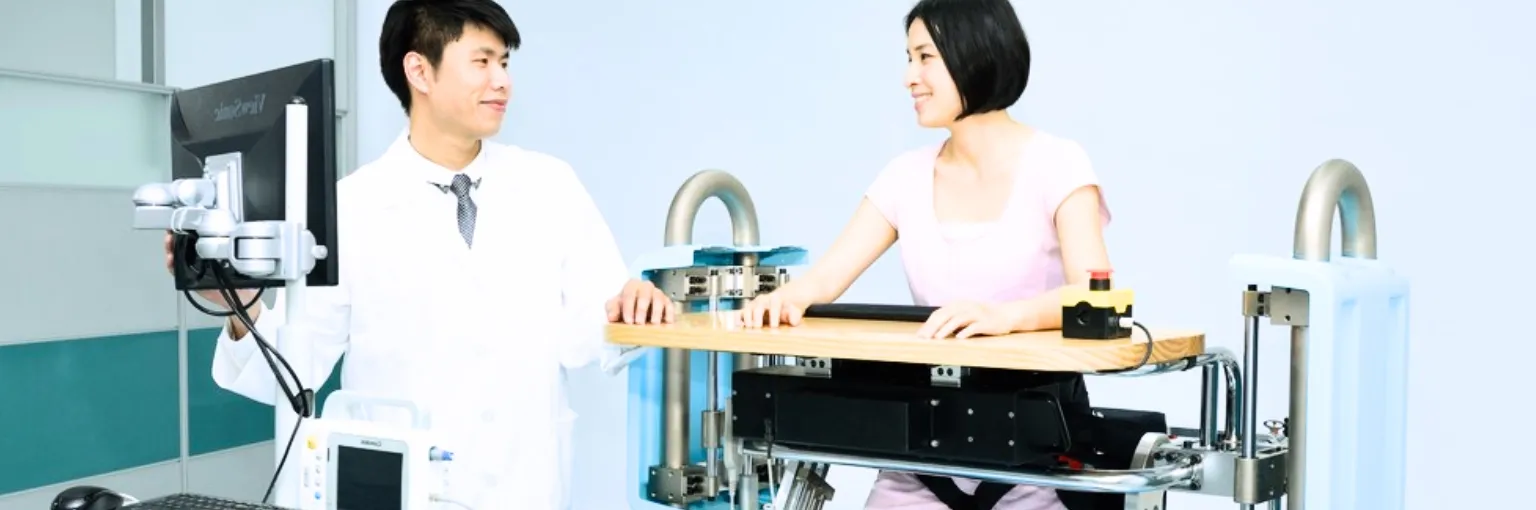
Modern robotic rehabilitation systems go beyond passive walking assistance by incorporating smart software and interactive feedback into therapy sessions. Intelligent training platforms can guide patients through precise walking movements while providing visual feedback and real-time coaching to encourage active participation.
These systems are also capable of automatically adjusting training intensity according to the patient’s performance and endurance levels. Real-time assessments of weight-bearing ability, posture control, gait phases, and movement symmetry allow clinicians to personalise therapy programs more effectively. In addition, customisable training parameters such as step length, cadence, and gait patterns support more targeted rehabilitation and progress monitoring over time.
Advancing Gait Rehabilitation with the HIWIN MRG-P100 & MRG-P110
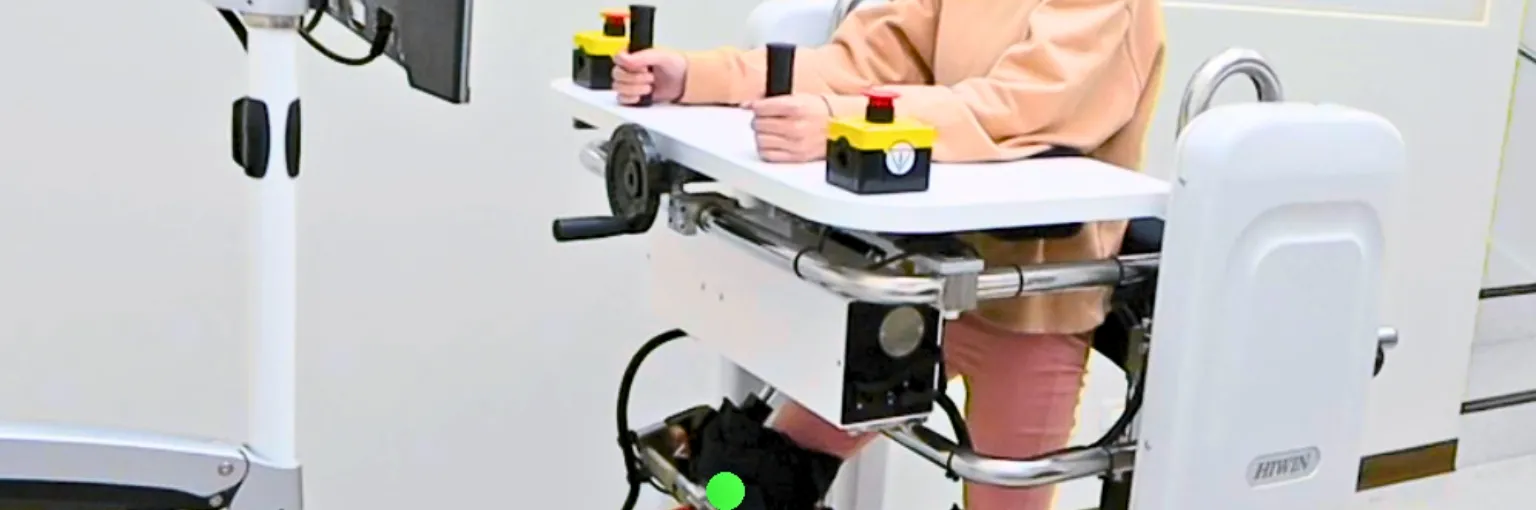
The HIWIN MRG-P100 and MRG-P110 Robotic Gait Training Systems are designed to support comprehensive walking rehabilitation through intelligent robotic assistance and personalised therapy functions. These systems provide safe upright gait training with features such as electric lift support, smart spasticity detection, emergency stop protection, and adjustable support structures that help patients practise walking comfortably and securely.
To learn more about the HIWIN solutions, visit our page now: https://bmec.asia/my/hiwin
More Information
- HIWIN Technologies Corp. HIWIN Robotic Gait Training System MRG-P100 Brochure.
- HIWIN Technologies Corp. HIWIN Robotic Gait Training System MRG-P110 / MRG-P11A Product Sheet.
HIWIN Technologies Corp., BMEC Pte Ltd