

Robotic gait training systems have revolutionised rehabilitation by providing consistent, intensive, and task-specific training for individuals with gait impairments. These systems offer several advantages over traditional therapy methods, leading to improved outcomes for patients with various neurological and musculoskeletal conditions.
Consistency & Repetition in Therapy

One of the primary benefits of robotic gait training is the ability to deliver consistent and repetitive movements. This consistency is crucial for neuroplasticity—the brain’s ability to reorganise itself by forming new neural connections—which is essential for recovery in conditions like stroke and spinal cord injuries. Robotic systems ensure that each step is performed with the same parameters, reducing variability and allowing for precise monitoring of progress.
Enhanced Patient Engagement & Motivation
Integrating interactive features, such as virtual reality environments and real-time feedback, can enhance patient engagement during therapy sessions. This increased engagement often leads to higher motivation and adherence to rehabilitation programs, which are critical factors in achieving optimal outcomes. The ability to track progress in real time also empowers patients to take an active role in their recovery, fostering a sense of accomplishment and boosting morale.
Applications Across Various Conditions
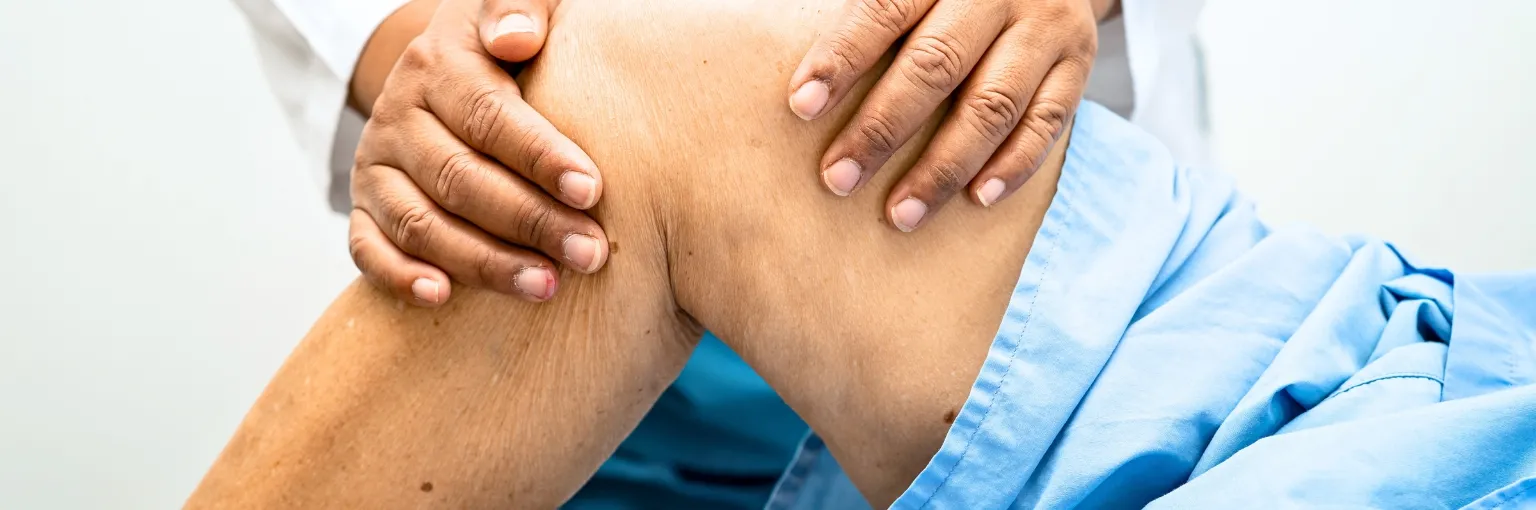
Robotic gait training has shown promise in treating a range of conditions:
Stroke Rehabilitation
Patients recovering from strokes often experience hemiparesis, leading to gait impairments. Robotic systems assist in retraining symmetrical walking patterns, improving balance, and increasing walking speed.
Spinal Cord Injuries
Individuals with incomplete spinal cord injuries can benefit from robotic gait training by promoting neural recovery and enhancing functional mobility.
Cerebral Palsy
Children with cerebral palsy often face challenges with movement and coordination. Robotic systems can aid in developing proper gait patterns, improving muscle strength, and enhancing overall mobility.
Parkinson’s Disease
Patients with Parkinson’s disease often struggle with slow movement and postural instability. Robotic gait training can help reinforce correct walking patterns and enhance mobility.
Efficiency & Customisation in Therapy

Another major advantage of robotic gait training systems is their ability to adapt to the specific needs of each patient. Unlike conventional therapy, which may require a therapist to manually adjust movements, robotic systems can be programmed with precise parameters tailored to the patient’s condition and progress. This personalisation ensures that patients receive the right level of support and resistance throughout their rehabilitation journey.
Additionally, robotic gait training enables more efficient use of clinical resources. With automated assistance, therapists can oversee multiple patients at once or focus on additional therapeutic interventions, improving overall rehabilitation efficiency.
Introducing the HIWIN MRG-P100
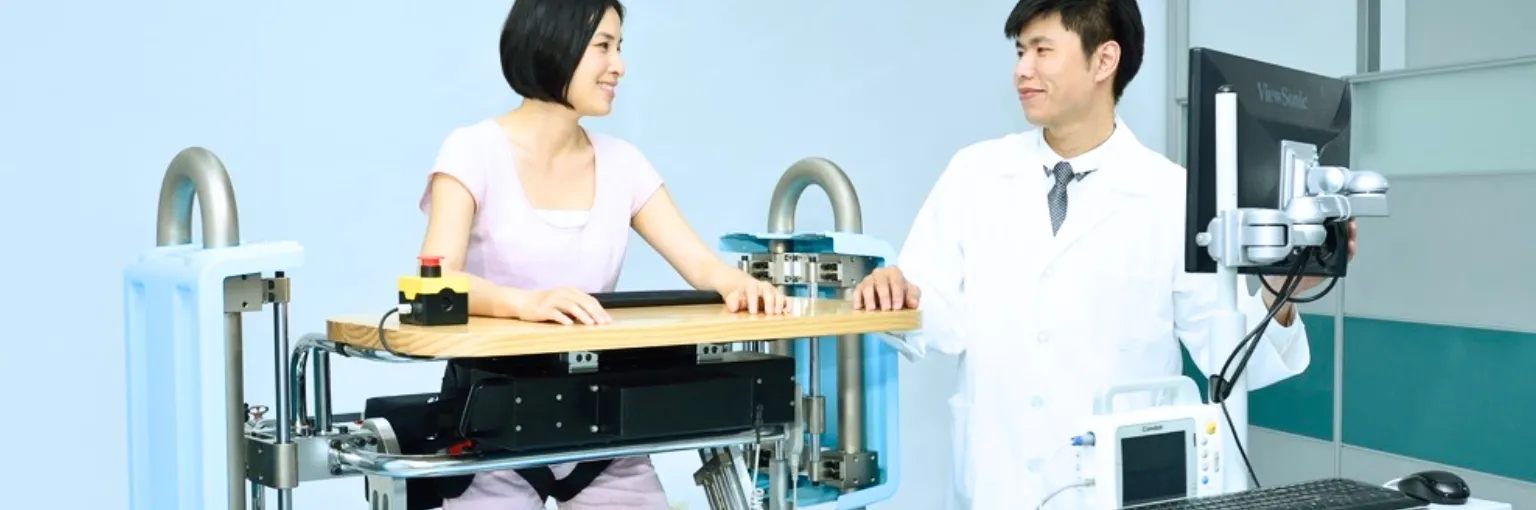
The HIWIN MRG-P100 is a cutting-edge robotic gait training system designed to provide effective lower limb rehabilitation for individuals with mobility impairments. This advanced device enhances gait therapy by offering a combination of safety, adaptability, and ease of use.
The system features a quick setup process, allowing therapists to initiate sessions efficiently and minimise downtime. Its three-point support structure ensures patient stability during training, making it ideal for individuals recovering from neurological or musculoskeletal injuries. Additionally, the HIWIN MRG-P100 is equipped with an automatic spasm detection system, which helps identify involuntary muscle contractions and adjust the training accordingly, providing a safer rehabilitation experience.
By incorporating robotic gait training solutions like the HIWIN MRG-P100, rehabilitation centers can significantly improve patient outcomes, offering a structured, technology-driven approach to mobility restoration. As robotic rehabilitation continues to advance, devices like this will play an increasingly vital role in helping individuals regain their independence and improve their quality of life.
For more information on the HIWIN MRG-P100, visit our page to find out more: https://bmec.asia/my/hiwin
More Information
HIWIN Technologies Corp. | https://www.hiwin.tw/products/medical_robot/mrg_p100.aspx
Reference:
- com. (2020). Robotic Gait Training and Its Effects on Motor Recovery in Patients with Neurological Disorders. Retrieved from https://www.mdpi.com/2076-3425/10/11/821
- com. (2020). Advancements in Robotic Rehabilitation for Gait Impairments: A Review of the Latest Technologies and Clinical Applications. Retrieved from https://link.springer.com/article/10.1007/s40846-020-00590-z
- Journal of NeuroEngineering and Rehabilitation (JNER). (2022). Effects of Robotic-Assisted Gait Training on Patients with Neurological Disorders: A Systematic Review. Retrieved from https://jneuroengrehab.biomedcentral.com/articles/10.1186/s12984-022-01076-6
- HIWIN Corporation. (n.d.). MRG-P100 Lower Limb Strength Training Machine – Product Overview and Specifications. Retrieved from https://www.hiwin.tw/products/medical_robot/mrg_p100.aspx
HIWIN Technologies Corp. / BMEC Pte Ltd