
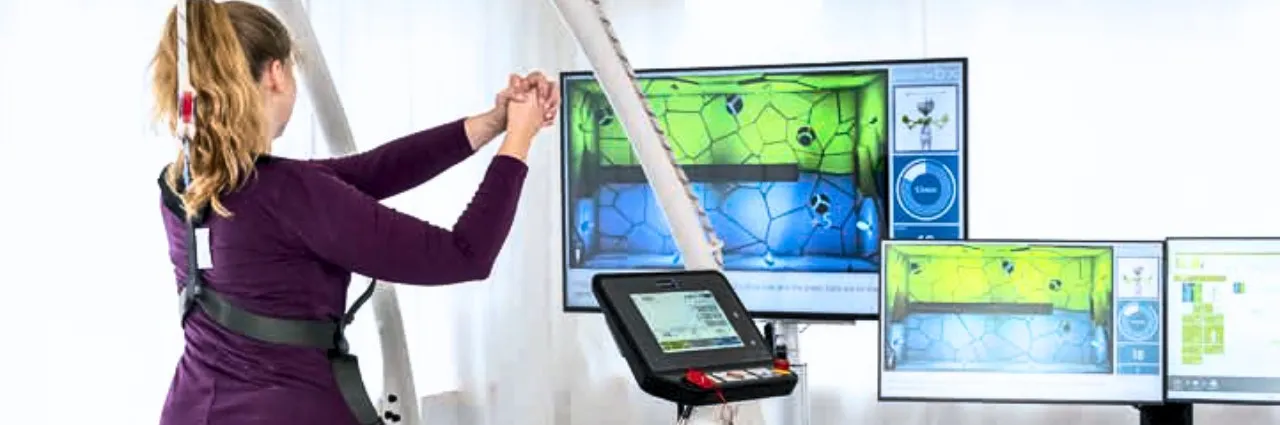
Walking is essential for mobility in everyday life. When gait is affected by conditions such as stroke or other neurological impairments, rehabilitation often involves repeated practice to rebuild movement, balance and confidence. Virtual Reality (VR) is introducing new possibilities to this process by combining physical gait training with interactive environments, feedback and engaging tasks.
Why Is Gait Training Important in Rehabilitation?
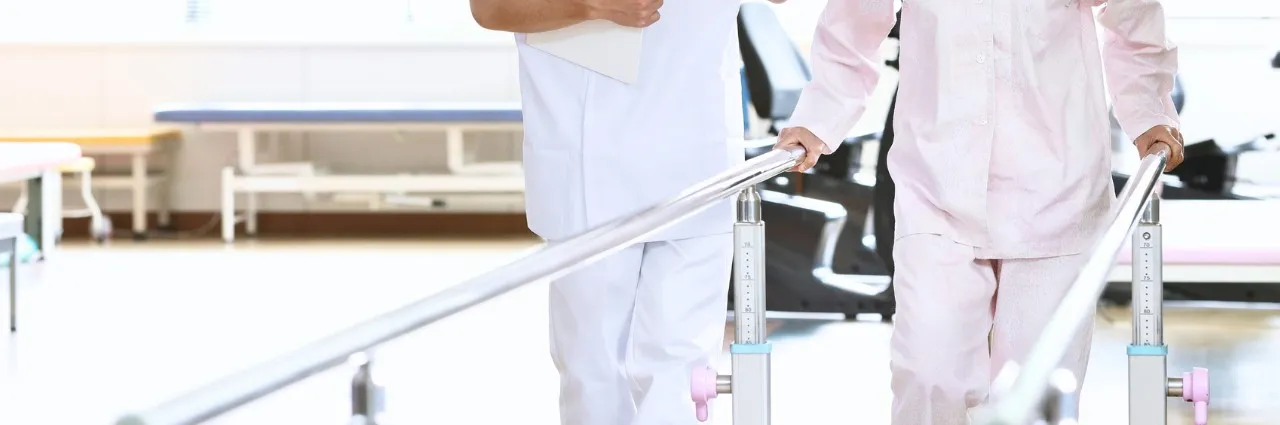
Gait is an important component of functional independence, allowing individuals to move through their surroundings. Following a stroke, however, impairments in motor control, sensation and postural control can contribute to difficulties with balance and walking. Changes may include reduced walking speed and altered gait patterns, making gait recovery an important focus of rehabilitation.
Effective gait rehabilitation requires patients to gradually relearn motor patterns. Treadmill training provides a controlled setting for repetitive walking practice, while newer technologies such as VR can add another dimension by providing visual information, interactive tasks and feedback while the patient is moving.
How Does Virtual Reality Add to Gait Training?
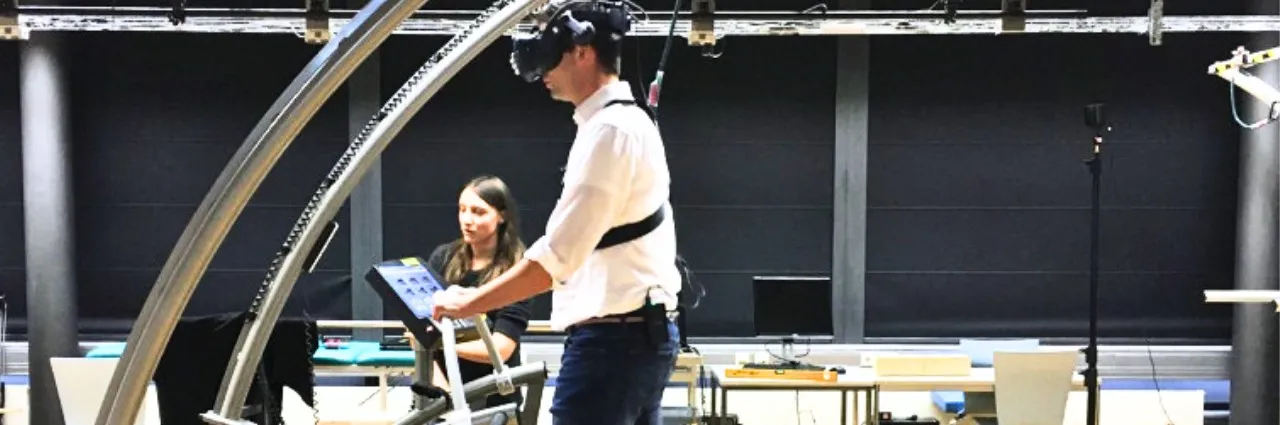
VR allows patients to interact with computer-generated environments while performing physical movements. Depending on the system, VR rehab may range from non-immersive screen-based experiences to fully immersive environments using head-mounted displays. Rather than simply repeating the same physical movement, patients can be presented with tasks, challenges and simulated environments that require them to respond while walking.
One of the potential advantages of this approach is engagement. Research has highlighted the game-like nature of VR as a way to support attention, motivation and adherence during rehabilitation. Interactive tasks can also introduce cognitive and motor challenges alongside walking, helping turn repetitive gait exercises into more varied training experiences.
What Can Real-Time Feedback Bring to VR Gait Training?
VR can also be used to provide patients with immediate information about their movements. A pilot study titled “Gait Training with Virtual Reality-Based Real-Time Feedback for Chronic Stroke Patients: A Pilot Study,” involving 15 people with chronic stroke, investigated treadmill gait training with immersive VR and real-time feedback. Participants in the experimental group trained on an h/p/cosmos quasar treadmill while receiving visual feedback about their centre of pressure and weight-bearing on the affected and unaffected sides.
After five weeks, both the VR-feedback and treadmill-only groups showed improvements, while the experimental group demonstrated greater improvements in several measures of motor function, balance and spatiotemporal gait performance. The researchers concluded that VR-based real-time feedback combined with treadmill training showed positive effects on motor function, balance and gait performance. As this was a small pilot study, further research is still needed, but the findings demonstrate the potential of combining interactive visual feedback with physical gait practice.
How Can Gamification Make Gait Training More Engaging?
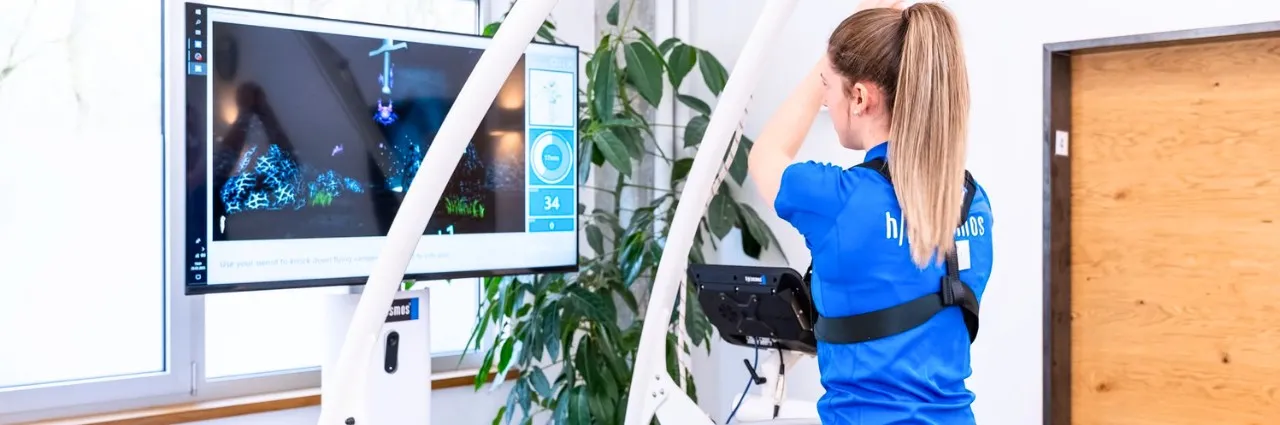
Screen-based virtual environments can introduce gamification and dual-task activities without requiring the patient to wear a headset. h/p/cosmos VAST.Rehab brings this approach to treadmill rehabilitation by combining virtual reality, functional training and serious gaming. During standing, walking or running on an h/p/cosmos treadmill, a camera tracks the user’s body and represents their movements within interactive activities displayed on a screen.
More than 25 games provide different cognitive and motor tasks, including activities targeting range of motion, functional movement and problem-solving. The system can incorporate upper-limb movements and postural tasks alongside walking for dual-task training, while therapists can assign personalised training targets and use built-in evaluation functions. Find out more about VAST.Rehab from us now: https://bmec.asia/my/h-p-cosmos
More Information
- h/p/cosmos sports & medical gmbh. “VR in Gait Training | Biomechanics | Science Update.” 19 December 2024. h/p/cosmos Science Update
- h/p/cosmos sports & medical gmbh. Rehab: Functional Training with Virtual Reality. h/p/cosmos, November 2024. VAST.Rehab Product Flyer
- Kim, Sunmin, Yangjin Lee, and Kyunghun Kim. “Gait Training with Virtual Reality-Based Real-Time Feedback for Chronic Stroke Patients: A Pilot Study.” Preprints, 2024. Posted 2 December 2024. org study
h/p/cosmos sports & medical gmbh, BMEC Pte Ltd